

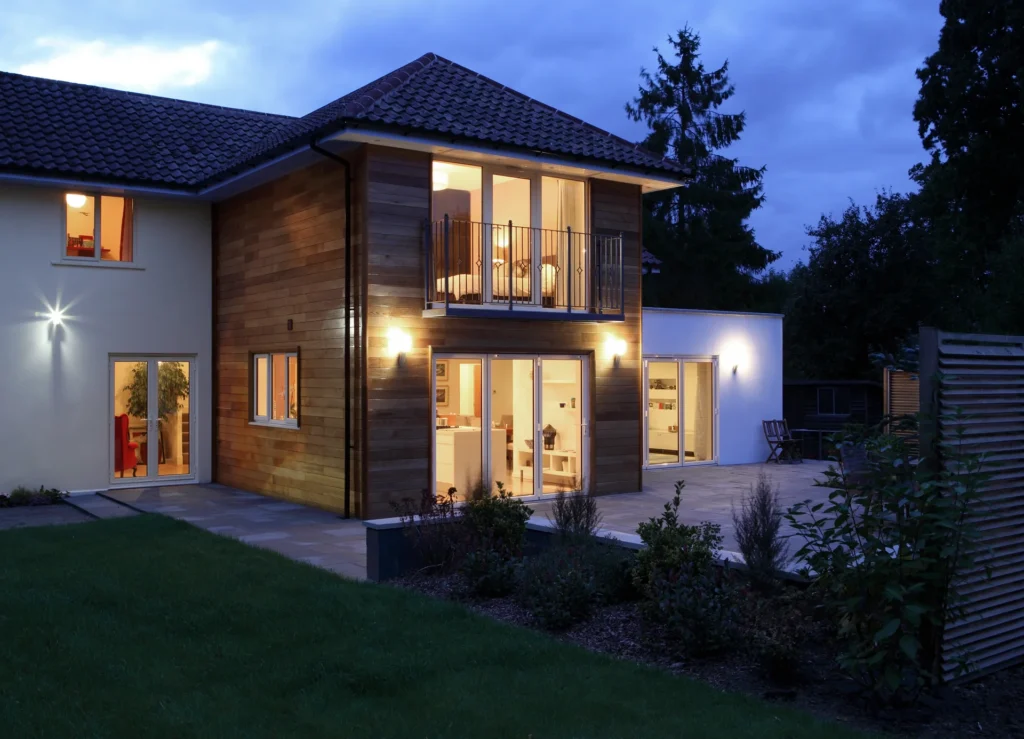
If you’re thinking about extending your home, the first question that usually comes up is: “Do I need planning permission?”
In many cases the answer is no. A large number of house extensions in Essex fall under Permitted Development (PD) rights, meaning you can build without submitting a full planning application.
However, this depends entirely on the size, design, and location of your home, and the rules can sometimes feel unnecessarily complicated. If you get it wrong, you risk enforcement action from your local council.
At Belvia Construction, we’ve helped hundreds of homeowners across Essex navigate these rules over the past 20 years. This guide breaks everything down in plain English, explaining exactly when planning permission is required, when it isn’t, and what Essex homeowners need to know before they start building.
Permitted Development Rules for House Extensions in Essex
Under Permitted Development (PD) rights, you can extend your home without formal planning permission, provided your extension meets certain limits. These rules are set nationally, but how they apply to your home depends on your specific property, its location within Essex, and any previous work that’s been carried out.
Single-Storey Rear Extensions
Single-storey rear extensions are the most common type of extension in Essex and are usually allowed without planning permission as long as they follow the permitted development rules below:
- Depth: The extension does not extend beyond the rear wall of the original house by more than 3 metres for a semi-detached or terraced house, or 4 metres for a detached house.
- Height: The maximum height of the extension is 4 metres.
- Eaves Height:If the extension is within 2 metres of a boundary, the eaves height cannot exceed 3 metres.
- Total Land Usage: The extension (along with any other garden buildings) does not cover more than 50% of the land around the original house.
- The materials used are similar in appearance to the existing property.
Expert Tip: The “Original House” refers to how the property stood on 1st July 1948 (or when it was built, if later). If previous owners have already extended the property, that extension counts against your permitted development allowance even if you didn’t build it. This catches a lot of homeowners off guard, particularly with older properties in areas like Chelmsford and Colchester where extensions from the 1970s and 80s are common.
Want to understand how much a rear extension might cost? See our guide to house extension costs in Essex
Side Extensions
Side extensions are a popular choice for adding utility rooms, downstairs WCs, or widening kitchens. They are usually permitted under PD if:
- They are single-storey only, with a maximum height of 4 metres.
- They are no wider than half the width of the original house.
- Materials generally match the existing house.
- They do not face onto a highway.
Side extensions that meet these criteria can make a significant difference to the layout of your home without the cost and delay of a full planning application.
Front Extensions
Front-facing extensions almost always require full planning permission. Because they alter the streetscape and are visible from public areas, local councils in Essex are particularly cautious about front extensions.
If you’re considering a front extension, expect to submit a full planning application. Councils will assess the impact on the character of the street, the effect on neighbouring properties, and whether the design is sympathetic to the existing building and surrounding area.
In conservation areas (common across parts of Chelmsford, Colchester, Brentwood, and Maldon), front extensions face even greater scrutiny and are frequently refused unless the design is exceptionally well considered.
Our advice: If a front extension is important to your plans, invest in a good local architect who understands what your specific council is likely to approve. A pre-application enquiry (more on this below) can also save you time and money before committing to a full submission.
The “Larger Home Extension” Scheme (6m and 8m Rule)
If you need more space than the standard 3m or 4m limits allow, you may be able to extend further using the Neighbour Consultation Scheme (also known as the Prior Approval process). This increases the limits to:
- 6 metres deep for semi-detached and terraced properties.
- 8 metres deep for detached properties.
While this still technically falls under permitted development, you must notify the council before starting work. The process works as follows:
- You submit a Prior Approval application to your local council.
- The council notifies your immediate neighbours of the planned works.
- Neighbours have 21 days to raise objections.
- If no objections are received, approval is granted under permitted development.
- If objections are raised, the council makes the final decision based on the impact of the proposed extension.
This is still not full planning permission, but it is mandatory for larger builds. The process typically takes 4-6 weeks and involves a small application fee.
Loft Conversions Linked to Extensions
If your loft or attic space is being incorporated into a wider extension project, it must remain within the permitted development volume rules:
- 40 cubic metres for terraced and semi-detached houses.
- 50 cubic metres for detached homes.
These volume limits include any previous loft additions, so check carefully before assuming you have the full allowance available. For more information on loft projects, see our loft conversions service page.
General Permitted Development Requirements
As a general rule, all permitted development extensions must also meet the following conditions:
- No verandas, balconies, or raised platforms
- Materials must be “similar in appearance” to the original building.
- The extension must not exceed the highest part of the existing roof.
- You must not exceed the permitted development limits if your home has already been extended.
If your proposed extension meets all the relevant criteria, you can proceed without a planning application. However, we strongly recommend obtaining a Lawful Development Certificate (covered below) for your records.
When You Need Planning Permission for an Extension in Essex
Even relatively modest changes can sometimes fall outside of Permitted Development. You will almost certainly need to submit a full planning application to your local Essex council if:
- You are building a wrap-around extension
Extensions that join the side and rear of a property usually require planning permission because they exceed the standard PD limits for either side or rear extensions individually. - You are building a double-storey extension
Two-storey extensions almost always require planning permission, particularly if they come within 7 metres of the rear boundary, alter the roofline, or sit close to neighbouring windows. - Your home has already been extended
Permitted development rights don’t reset when you buy a property. Any previous additions and extensions reduce the allowance available to you today. - Your home is in a restricted area
This usually includes:- Conservation areas (which are common in Chelmsford, Colchester, Brentwood, Maldon, and Southend)
- Article 4 areas where councils have removed PD rights for specific streets to preserve local character
- New-build estates with developer restrictions. If your home is on a newer estate (such as Beaulieu Park in Chelmsford or Dunton Fields in Basildon), check your title deeds carefully as developers often place restrictive covenants preventing extensions for a set number of years.
- Your property type has no PD rights
This applies to flats, maisonettes, and listed buildings, all of which require full planning permission for any external alterations. - You are planning a front extension
As covered above, front-facing extensions almost always require a full planning application.
What Happens After Planning Approval?
A common misconception is that planning approval means you’re ready to build. In reality, planning approval is only about halfway through the process. After receiving planning permission, your architect still needs to prepare full specification plans and a structural engineer’s report. These detailed plans then need to be submitted to Building Control for approval (known as Building Regulations approval), confirming that the proposed materials, structural design, and specifications meet the required standards. This additional step can take 4-6 weeks and must be completed before construction begins.
Understanding the full journey from approval to completion helps you plan realistic timelines. For a detailed breakdown of what happens once construction starts, read our guide to the complete house extension building process.
Using Pre-Application Enquiries to Strengthen Your Submission
If your project is large or complex, you can pay for a pre-application enquiry with your local council. This gives you an informal assessment of how likely your plans are to be approved before you submit a full application.
Pre-application advice is valuable because it highlights potential issues early, allowing your architect to make changes and strengthen the proposal before it goes through the formal process. It can save considerable time and money compared to submitting a full application that gets refused and needs to be redesigned.
The cost varies by council (typically £100-£300 for householder applications in Essex), and the response time is usually 4-6 weeks. Given the cost of a refused application and the delay it causes, a pre-application enquiry is often a worthwhile investment for anything beyond a straightforward rear extension.
Planning Permission Timelines for Essex Councils
Although planning rules are set nationally, every council in Essex operates slightly differently when it comes to processing times, local priorities, and areas of particular sensitivity.
| Council | Typical Review Time | Notes |
|---|---|---|
| Chelmsford City Council | 6–8 weeks | Multiple conservation areas in the city centre and surrounding villages. Beaulieu Park and other new-build estates often have restrictive covenants. |
| Colchester City Council | 6–10 weeks | Conservation areas across the town centre and in villages like Dedham and Wivenhoe. Can be slower during busy periods. |
| Brentwood Borough Council | 8–12 weeks | One of the slower councils in Essex. Green Belt land covers large areas of the borough, adding complexity. |
| Maldon District Council | 7–9 weeks | Smaller team, so processing can be slower. Conservation areas in Maldon town and Burnham-on-Crouch. |
| Southend-on-Sea City Council | 6–8 weeks | Generally responsive. Some Article 4 directions in place in older residential streets near the seafront. |
| Basildon Borough Council | 7–10 weeks | New-build estates in Laindon and Dunton Fields often have developer restrictions that limit what can be built. |
These are typical timescales for straightforward householder applications. More complex proposals, or applications that require amended plans, can take significantly longer.
Important: These timelines cover the planning application itself. Remember that you’ll also need Building Regulations approval (an additional 2-4 weeks) and time for your architect to prepare detailed construction drawings after planning is granted.
Local Factors That Catch People Out
Beyond the standard planning rules, there are several Essex-specific factors that frequently cause delays or unexpected costs:
Trees: If there are trees near your proposed extension, particularly trees protected by Tree Preservation Orders (TPOs) or trees within conservation areas, you may need a tree survey and potentially an arboricultural impact assessment before your application is considered. Removing or damaging a protected tree without permission can result in significant fines.
Drains and sewers: If you’re building over or within 3 metres of a public sewer, you’ll need a “Build Over Agreement” from Anglian Water or Thames Water (depending on your location within Essex). This requires a survey and formal approval, which can add several weeks to your timeline.
Ground Conditions: Essex has varied soil types, with heavy clay common across much of the county. Clay soil expands and contracts with moisture, which can affect foundation design and costs. A ground survey early in the process helps avoid surprises once excavation begins. For more on how ground conditions affect the build, see our house extension building process guide.
Services: Gas mains, water pipes, and electrical cables running through your garden can all affect where and how you build. Diversion of services is expensive and time-consuming, so it’s important to identify these early.
Our recommendation: Use a local architect who knows the area. They’ll be aware of local restrictions, common ground conditions, and any planning sensitivities specific to your council. Some online architects can generate drawings quickly, but they may miss key local factors that a local professional would pick up immediately. At Belvia, we work closely with experienced local architects across Essex who can help you draw up plans if needed.
Permitted Development vs Building Regulations: What’s the Difference?
This is one of the most common points of confusion for homeowners planning an extension. The simplest way to think about it:
- Planning permission decides what you can build – the size, position, and appearance.
- Building regulations ensure it’s built safely and correctly – the structure, insulation, electrics, drainage, and fire safety.
Even if your extension doesn’t need planning permission, it will always need Building Regulations approval for any structural work. This means inspections at key stages of the build (foundations, structural steelwork, insulation, drainage, and completion) to confirm everything meets current standards.
At Belvia, we handle the coordination of Building Control inspections throughout the build, ensuring your insulation, steel beams, foundations, and drainage all meet the required standards. You can see exactly what those inspections look like in practice in our stage-by-stage guide to the extension building process.
Why You Should Get a Lawful Development Certificate (LDC)
If your project falls under Permitted Development, you aren’t legally required to get any paperwork from the council. However, we strongly recommend you do.
You can apply for a Lawful Development Certificate (LDC). This is an official document from your local council confirming that your extension was lawful at the time of construction.
Why does this matter? When you eventually sell your home, the buyer’s solicitors will ask for proof that any extensions are legal. Without an LDC, a sale can fall through or be delayed by months while retrospective checks are carried out. An LDC typically costs between £100-£200 and takes 4-6 weeks to process – a small price for long-term peace of mind.
Common Mistakes Homeowners Make When Extending
After completing countless house extensions across Essex over the past 20 years, we’ve seen the same mistakes come up time and again. All of them are avoidable with the right guidance early on:
- Assuming PD rights are still intact: JJust because your neighbour extended their home doesn’t mean you can do the same. Your rights may have already been used up by a previous owner’s extension, or your council may have removed PD rights through an Article 4 direction.
- Ignoring the “45-degree rule”: Planning officers frequently refuse extensions that block too much natural light from a neighbour’s window. The test involves drawing a 45-degree line from the centre of the nearest neighbouring window. If your extension crosses that line, expect pushback.
- Forgetting about the sewers: Building over or near a public sewer without a Build Over Agreement is a common oversight that can halt a project mid-build. Check for public sewers early in your planning.
- Misjudging Boundary Distances: This is particularly relevant for side extensions, where the 2-metre boundary rule for eaves height catches people out.
- Not checking for covenants on newer estates: Properties on developments built in the last 10-15 years frequently have restrictive covenants in the title deeds that limit or prevent extensions entirely.
- Starting work before confirming permissions: It might seem obvious, but beginning construction before you’ve confirmed whether you need planning permission (or before an LDC has been issued) puts you at risk of enforcement action.
If you’re in any doubt, get professional advice early. It’s significantly cheaper than redesigning or undoing work halfway through a build.
How to Check If Your Essex Extension Needs Planning Permission
Here’s a straightforward process to get clarity before you commit to anything:
- Check your property’s PD status. Confirm whether your home still has full permitted development rights, or whether they’ve been removed or reduced by previous extensions, Article 4 directions, or conservation area restrictions.
- Measure the proposed extension. Compare your plans against the specific PD limits for your property type (detached, semi-detached, or terraced).
- Check your title deeds. Look for any restrictive covenants, particularly on newer estates.
- Review local planning rules. Check your specific Essex council’s planning portal for any area-specific constraints.
- Speak to a local architect or planning consultant. A professional with local knowledge can quickly confirm whether your plans comply with PD or require a full application.
- Apply for a Lawful Development Certificate. If your extension falls under PD, an LDC provides written proof of compliance which is valuable both now and when you come to sell.
If your extension does require planning permission, don’t be discouraged. The process is manageable with the right team, and approval rates for well-designed householder applications in Essex are generally high.
What Happens If You Build or Extend Without Permission?
If you build something that required planning permission and didn’t obtain it:
- You may receive an enforcement notice from your local council, requiring you to alter or remove the work.
- You could be forced to demolish part or all of the extension at your own expense.
- Selling your home becomes significantly more complicated, as buyers’ solicitors will flag the unauthorised work.
- You can apply for retrospective planning permission, but there’s no guarantee it will be granted, and if it’s refused, you’re left with an illegal structure.
Enforcement action is stressful, costly, and entirely avoidable. Confirming your permissions before starting work is always the right approach.
Planning an Extension in Essex? Let’s Talk
If you’re unsure whether your extension needs planning permission, or you want guidance before committing to designs, we’re happy to help.
Belvia Construction offers free initial consultations where we’ll assess your property, discuss your plans, and advise on the best route forward – whether that’s permitted development, a full planning application, or a pre-application enquiry.
With over 20 years of experience building house extensions across Essex, we handle everything from initial consultation through to Building Control sign-off.
Get in touch with Belvia Construction today.
View our completed extension projects →
Frequently Asked Questions
Can I build a house extension without planning permission in Essex?
Yes, many house extensions in Essex can be built under Permitted Development rights without a full planning application. Single-storey rear extensions up to 3 metres deep (semi-detached/terraced) or 4 metres deep (detached) typically qualify, provided they meet the height limits and other PD criteria. However, your PD rights may have been reduced by previous extensions or removed by your local council, so it’s important to check before you start.
How long does planning permission take in Essex?
Typical processing times vary by council. Chelmsford and Southend usually take 6-8 weeks, Colchester 6-10 weeks, and Brentwood 8-12 weeks. These are timescales for straightforward householder applications, more complex proposals can take longer. Remember that Building Regulations approval (an additional 2-4 weeks) is also required after planning is granted.
Do I need planning permission for a single-storey rear extension?
In most cases, no. A single-storey rear extension that stays within the standard depth limits (3m for semi-detached/terraced, 4m for detached), doesn’t exceed 4m in height, and meets all other PD criteria can usually be built without planning permission. If you need to go deeper (up to 6m or 8m), you can use the Neighbour Consultation Scheme, which is a simplified approval process rather than full planning permission.
Do I need planning permission for a double-storey extension in Essex?
Almost always, yes. Double-storey extensions typically require a full planning application, particularly if they come within 7 metres of the rear boundary, alter the roofline, or affect neighbouring properties. The application process usually takes 6-12 weeks depending on your local council.
What is a Lawful Development Certificate and do I need one?
A Lawful Development Certificate (LDC) is an official document from your local council confirming that your extension is legal under Permitted Development rights. While not legally required, we strongly recommend obtaining one. It costs between £100-£200 and provides proof of legality that buyers’ solicitors will request when you come to sell your home.
What happens if I build an extension without planning permission?
If your extension required planning permission and you didn’t obtain it, you could face enforcement action from your local council, be required to alter or remove the work, and face significant complications when selling your home. Retrospective planning permission can be applied for but isn’t guaranteed. It’s always best to confirm your permissions before construction begins.
What is the difference between planning permission and building regulations?
Planning permission controls what you can build (the size, position, and appearance of your extension). Building regulations ensure it’s built safely and correctly, covering structure, insulation, electrics, drainage, and fire safety. Even if your extension doesn’t need planning permission, it will always require Building Regulations approval.
How much does a house extension cost in Essex?
Extension costs vary significantly depending on size, specification, and complexity. For a detailed breakdown of current pricing, see our house extension costs guide.